
I’m sure you’ve experienced this before:
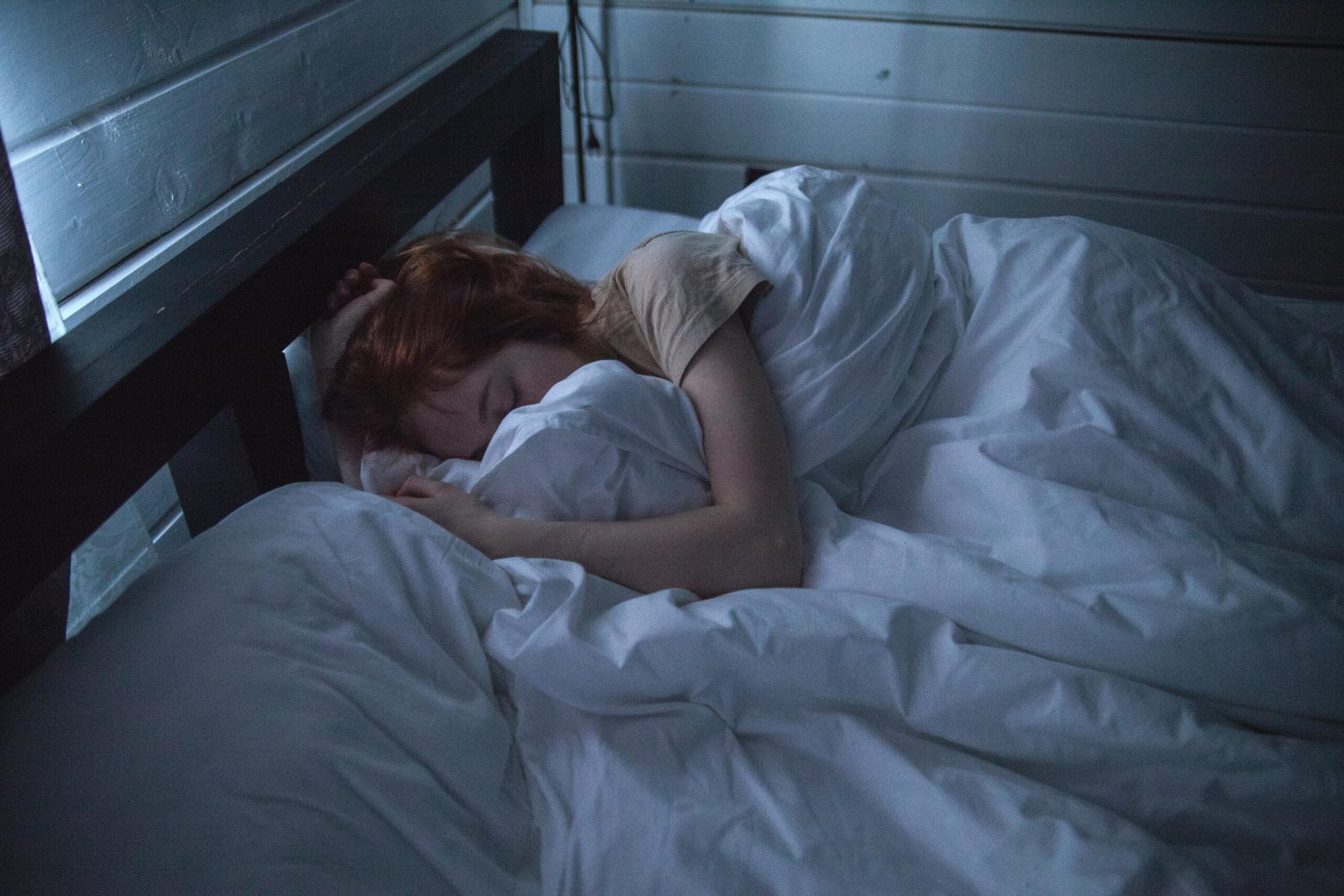
You go to bed early because you have an important meeting, presentation, event, or flight the next day, and are hoping to get enough sleep.
But the opposite happens.
For hours, you twist and turn, trying to fall asleep, but your mind keeps wandering, and you seem to feel more awake every minute. You try everything you can think of, but nothing seems to help you fall asleep.
Or maybe your sleep problems aren’t occasional, but happen on a daily basis.
Either way, this blog post is for you.
The Importance of Getting Good Sleep
It’s common knowledge that getting a good night’s sleep will improve your overall well-being.
The most obvious signs of a good night’s sleep can be easily seen or felt:
- Improved mood: happy, motivated, excited
- Improved memory and focus
- More energy
- Better skin
- More alertness => fewer accidents
Yet, there are many more invisible ways in which sleep affects your health.
When you get enough deep sleep, your body has enough time to heal and restore itself.
Sleeping plenty helps you lower inflammation (and not sleeping enough increases inflammation).
A good night’s sleep helps your body maintain hormone balance, promoting optimal health.
Whereas bad sleep, or not enough sleep, does the opposite and disrupts your circadian rhythm, which in turn disrupts your hormonal balance.
Sleeping also boosts your metabolism, improves muscle recovery, and promotes healthy heart function.
I think you get the point: sleeping well is a vital tool for your body, making a significant difference in your overall health.
4 Tips to Fall Asleep Faster, And Why They Work
Knowing all these incredible benefits that sleep brings us, it’s almost impossible not to try to sleep well.
Setting yourself up to fall asleep faster isn’t something that only takes place once your head hits the pillow.
Setting yourself up for a successful night of sleep starts as soon as you wake up.
Here are 4 simple things you can implement to help you fall asleep faster.
1. No phone before bed
You’ve probably heard this tip before, and maybe you’ve willingly ignored it for the longest time.
But not using your phone for 90 minutes before sleeping makes a big difference. Why?
Two reasons:
- The light of your smartphone blocks the production of melatonin (the sleep hormone)
- Using your phone, specifically social media, increases your dopamine levels (one of the happiness hormones). Dopamine is tied to being alert and awake, which is not what you want at night.
So, what to do instead?
Get off the screens
- Read a book,
- Play a board game with your partner, family, or friends,
- Journal,
- Talk with others in your household. Don’t know what to talk about? There are many card games designed to spark conversation.
Perhaps you want to do all of the above, but are having trouble breaking your bad habits.
If that’s the case, refer to this blog post to learn how to ‘turn off the cues’ and break bad habits.
If you really want to continue using your phone, we suggest using a blue light blocker or blue light-blocking glasses to help you stabilize the production of melatonin.
2. Create a sleep sanctuary
Our brains connect places to actions. Which is why it’s extremely important to keep our bed for sleeping, and not for work, relaxation, meditation, or anything else.
When we program our minds to know that when we get to bed, we need to sleep, it will eventually become easier to actually fall asleep in our bed.
Our bed, and maybe even our bedroom, should be our own sleep sanctuary.
If you share a sleeping space with someone, make arrangements and agree to keep work out of the bedroom.
Another thing that would really benefit your sleeping sanctuary is getting some air-filtering, easy-care houseplants.
NASA has compiled a list of the best air-filtering plants.
If you don’t have a green thumb, any of these are super easy to take care of and hard to kill.
We recommend choosing plants based on how much sunlight is present in your room.
For darker rooms, go with plants that thrive in the dark; for lighter rooms, go with plants that tolerate more sunlight.
Spider Plant (Chlorophytum comosum)
- Thrives in indirect sunlight
- Tolerates a range of temperatures
Snake Plant (Sansevieria trifasciata)
- Thrives in low-light/dark rooms
- Tolerates infrequent watering
Peace Lily (Spathiphyllum)
- Thrives in indirect sunlight
- Prefers consistently moist soil
Aloe Vera (Aloe barbadensis miller)
- Thrives in bright indirect sunlight
- Tolerates infrequent watering
English Ivy (Hedera helix)
- Thrives in moderate light
- Prefers consistently moist soil
Rubber Plant (Ficus elastica)
- Thrives in bright indirect light
- Prefers moderate watering
Golden Pothos (Epipremnum aureum)
- Tolerates low light
- Tolerates infrequent watering
3. Relax before bedtime
Relaxing before bedtime will help your mind get in the right space to fall asleep.
It calms the chatter in your mind, the endless to-do lists that are floating around, and the things you’re upset about that happened during the day.
There are many ways to relax before going to sleep.
Here are some ideas:
Meditation
To buffer your everyday stress, meditation is a great solution.
You don’t need more than 5 minutes (unless you want to spend more time meditating, of course).
You don’t have to conform to any religion or belief to meditate.
Meditation is simply brain training. And like with most things, there are different ways of doing it.
Guided meditation
When you’re first starting out, it can be easier to go on YouTube (with your blue light filter on) and find a video that talks you through a short session.
It can be especially helpful for busy people.
Since you’re focusing on the instructions, your mind cannot wander elsewhere to think about the stress of the day.
Mindfulness meditation
The easiest way to describe this is: be present and feel calm.
Though the description might be easy, the execution can be quite hard, because it’s not easy to quiet our mind and really be present.
When trying mindfulness meditation, try focusing on the little things. Such as the feeling of the ground under your feet, the sound of your breath, or the heaviness in your arms and legs.
Want to learn more about mindfulness? Click here
Movement meditation
If you don’t really want to sit or stand still, you can try practicing a form of movement meditation.
There are many forms of movement meditation that originated in Asia, such as Qi Gong, Tai Chi, and Ji Fa.
You can easily find pictures and videos of these routines online if you want to get started with them.
Journaling
You may have tried journaling before, and if so, you know it’s an excellent way of calming your mind and getting rid of any stress you have.
It’s incredible how writing down your experiences of the day, what you’re feeling, your plans for the week, or your ideas and dreams, can make such an impact on your mental state.
Journaling is frequently recommended by therapists to clients who are going through a rough patch, but it’s not just useful for that.
Journaling helps you relax, clear your mind, and get in the right headspace to go to sleep.
Breathing
Food, water, and sleep. They’re all important.
But you can go without for a while.
Breathing, on the other hand, is so essential to our existence that you can only go without for a few minutes.
Breathing is running largely on autopilot, as it is part of your autonomic nervous system.
When we breathe throughout the day, our breathing is often shallow and short. Barely giving our bodies the oxygen it needs, and not fully detoxifying our bodies (think of the carbon dioxide that remains in our bodies as a waste product if we don’t breathe out fully).
Breathing makes our bodies feel good, helps us be healthier, and calms our minds.
There are various ways you can do breathing exercises.
A popular method is box breathing.
You can start breathing in for 4 seconds, holding it for 4 seconds, breathing out for 4 seconds, holding it for 4 seconds, and repeat.
When you’re getting better at it, try longer breaths.
Try keeping your mind focused on breathing alone.
Another method is what we like to call in-and-out.
You start by 1 and try to go up to 30 (that’s one breath per minute!).
Breathe in for 1 second, breathe out for 1 second.
Breathe in for 2 seconds, breathe out for 2 seconds.
And continue this as long as you can.
It will probably take a few days or weeks of training before you get to one breath per minute.
In the beginning, you might actually get a little dizzy, in which case you should take it easy.
4. Have a caffeine curfew
Most of us don’t realize that coffee is a powerful nervous system stimulant and hormone disrupter.
Caffeine is the active stimulant in coffee, and can also be found in tea and chocolate, among other things.
Caffeine provokes your adrenal glands to produce adrenaline and cortisol (commonly known as stress hormones).
These two hormones are “anti-sleep hormones”, which block the production of melatonin (more commonly known as the sleep hormone).
Though melatonin is indeed related to sleep, it doesn’t help you fall asleep, like often advertised. Melatonin helps you have a good quality sleep.
Melatonin production starts roughly when the sun goes down, and peaks around 3-4am.
You can see how caffeine, a melatonin-blocking stimulant, can really mess up your sleep if you don’t set a caffeine curfew.
So, how long before sleeping should you stop drinking caffeine?
Caffeine has a half-life of around 4-5 hours. This means that after 4-5 hours, half of the substance is still left in your system.
If you consume caffeine at 8am in the morning, let’s say 200 milligrams, you will have 25 milligrams of caffeine left in your system by 8pm.
But, if you consume those 200mg at 4pm, you’ll still have 100 milligrams of caffeine in your system at 8pm, which is roughly when the sun sets in a lot of places, and your melatonin production is supposed to start.
In either case, caffeine can really disrupt your sleep.
So, try minimizing the use of caffeine, set a caffeine curfew, or quit consuming caffeine altogether.
Of course, there are many more things you could do to fall asleep faster, improve your sleep quality, and with that, improve your energy during the day.
If you’d like to receive more sleep tips and other tips to help you improve your overall wellbeing, sign up for our newsletter!
And please let us know in the comments if you’d like another blog post about this topic or anything related to sleep.
Sleep well!